
Gunvor Simonsen appointed professor of history
Gunvor Simonsen, a historian specialising in the history of the Caribbean, took up her post as professor at the Saxo Institute on 1 March 2026.
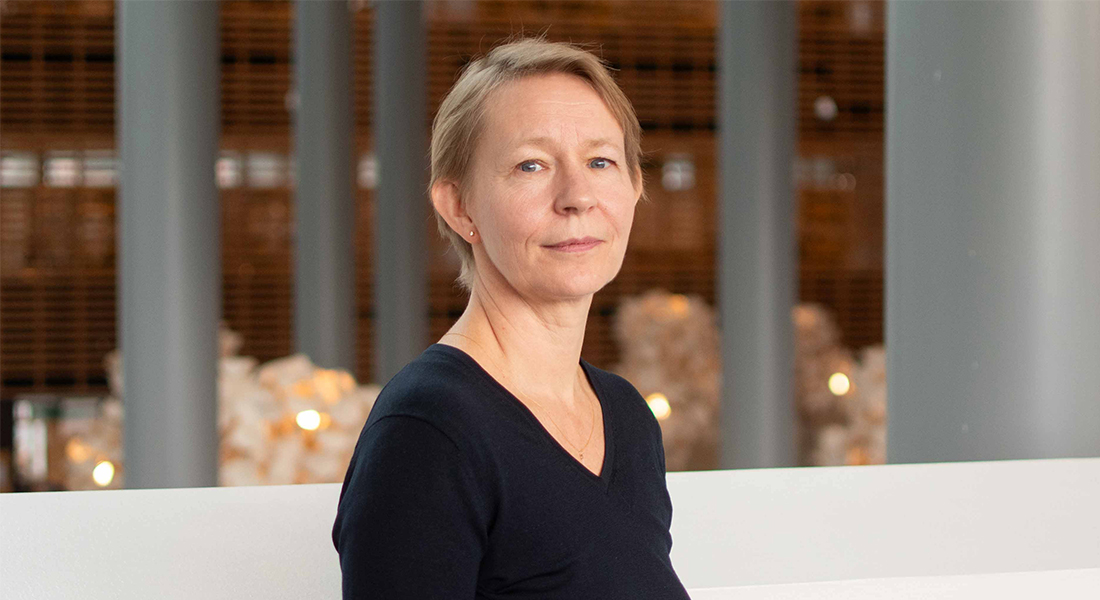
Commenting on her appointment, Gunvor Simonsen says:
– I look forward to continuing to expand our collective knowledge of the Caribbean, both past and present. Many of the major changes we face today began in the Caribbean slave societies during the 17th and 18th centuries. It is in the Caribbean that we first see the results of industrialised agriculture, intensive resource extraction and the overexploitation of people, animals and nature. It is also here that our modern notions of freedom truly take shape. The history of the Caribbean can help us understand the multifaceted nature of freedom. This is knowledge we need today, when the question of what kind of freedom we want is very much on the political agenda.
Gunvor Simonsen holds a PhD from the European University Institute in Florence and a master’s degree from Roskilde University in history and international development studies. In her research, she has examined issues relating to governance, gender, religion, race and resistance in the Caribbean, including the US Virgin Islands during the period when they were under Danish rule and were known as the Danish West Indies.
Acting Head of Department Anders Holm Rasmusen at the Saxo Institute describes the appointment as a major boost to the university’s research in this field:
– Gunvor Simonsen is an international authority in the study of Caribbean history, where she insists on viewing the entire region as a single geographical entity rather than solely from the perspective of Danish colonial history. Gunvor’s historical research addresses many highly topical issues, and I am therefore delighted that, with Gunvor’s appointment as professor, we have been able to secure this research at the University of Copenhagen, he says.
What is freedom when birdsong falls silent?
Gunvor Simonsen is involved in several international research projects regarding the history of the Caribbean. In the project MAPPING FREEDOM: From slavery to freedom in the U.S. Virgin Islands, Gunvor, along with partners from the Danish National Archives and the Caribbean Genealogy Library, St. Thomas, is creating a dataset on the population of the former Danish West Indies during the period from slavery to freedom. This information will be used to investigate the legacies of slavery – and to understand what freedom actually means.
Furthermore, she is currently putting the finishing touches to the ERC-supported research project In the Same Sea: The Lesser Antilles as a Common World of Slavery and Freedom. Together with a group of early career researchers, she has studied the Caribbean as a region characterised by connections between Danish, Swedish, Dutch, French and British colonies. With this research, the research group is taking a decisive step towards establishing a new Caribbean history that anchors the islands in the Caribbean archipelago rather than in the many long-distance connections that the islanders had to Europe and Africa.
– This collaboration has inspired me to consider how the history of the Caribbean can help us understand what freedom is, how freedom is intertwined with the natural world around us, and how it is shaped by different groups with many different agendas and dreams. By the mid-1600s, there were few birds left in Barbados. The island’s forest cover had been cut down and burned; birdlife had vanished. What is freedom when birdsong falls silent? These are some of the questions I will be exploring in the coming years, says Gunvor.
Gunvor Simonsen will give her inaugural lecture on 11 September 2026. Further information will follow, including in the Saxo Institute’s calendar.