
«Vi ere en Nation vi med ...»
Nation Building and Minority Communities in Norway 1905-1930. Two examples
Lecture by Christine Amadou, Professor of intellectual history, and Idunn Victoria Rostølis, PhD Candidate in intellectual history, both at the University of Oslo
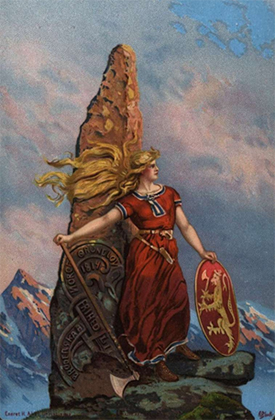
How is a national community created, and what role can Christianity play in the national project? The 19th century was the great age of nation building, also in Norway. After the dissolution of the union with Sweden in 1905, efforts continued to define what and who was Norwegian, often at the harsh expense of minorities who did not fit into the emerging self-image of the new nation.
In this guest lecture, two intellectual historians from the University of Oslo will explore “Norwegianness” through the lens of two minorities, one religious and one ethnic: Catholics and Romanifolk (Roma). None of these groups fit the image of “the Norwegian” that had taken shape after the independence from Denmark in 1814. Their position and scope for self-expression differed, but the ways in which they were othered by the majority population had many similarities.
From the 1850s to the 1980s, Norwegian authorities funded various assimilation measures targeting the Romanifolk. The main actor in this work was the missionary organisation Norsk misjon blant hjemløse (–), which in the first half of the 20th century took over the care of around one-third of all children belonging to this minority group. In her doctoral thesis, Idunn Victoria Rostøl examines how the organisation set about engaging children from the majority population in support of its mission, and in her talk she will discuss how these children responded to the organisation’s call for action.
Professor Christine Amadou will take as her point of departure Norwegian Catholics’ celebration of the Stiklestad Jubilee in 1930 and contemporary anti-Catholic propaganda. The jubilee offered the Catholic minority an opportunity to (quite literally) fly the flag of Norwegian belonging – a festively staged boost to their Norwegianisation. This lecture presents the specifically Norwegian form of anti-Catholicism and a tentative analysis of the strategies and rhetorical tools Catholics employed around 1930 to secure a place for themselves within Norwegian society.
Map of South Campus
View directions.
View on map of the Faculty of Humanities - South Campus.
View map of South Campus (pdf).